What If the Driver Who Hit You Doesn’t Have Insurance? Understanding Your Options After an Uninsured Motorist Crash
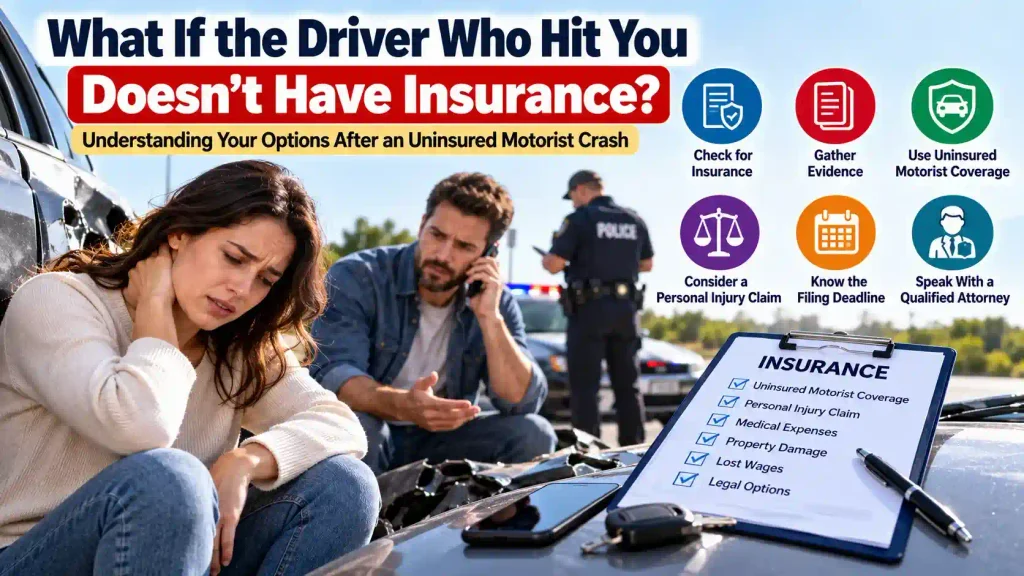
A crash with an uninsured driver can leave an injured person facing medical bills, vehicle damage, and lost income without a clear source of payment. The driver may have limited money or assets, while insurance companies may dispute responsibility or coverage. Prompt action protects evidence and preserves legal options. Understanding uninsured motorist coverage, personal injury claims, and filing deadlines helps accident victims decide what to do after the collision.
Check For Insurance and Gather Evidence
Start by confirming whether the other driver had active insurance on the date of the crash. Request the driver’s insurance information, photograph the insurance card, and ask law enforcement to record the details in the collision report.
An insurer can later deny coverage because of a lapsed policy, an excluded driver, or inaccurate information. The driver’s lack of insurance does not eliminate the need to document fault. Keep photographs, witness names, medical records, repair estimates, and wage-loss statements handy.
Additionally, reliable counsel like Levine and Wiss can help victims organize insurance documents and crash records on time. Qualified attorneys focus on coverage language, liability evidence, medical proof, and the deadline that applies in the state where the collision occurred.
Review Your Uninsured Motorist Coverage
Uninsured motorist coverage can pay for injuries caused by a driver without liability insurance. Depending on the policy and state law, it can cover medical expenses, lost wages, pain and suffering, and other losses.
Some policies also include underinsured motorist coverage. That protection becomes valid when the responsible driver carries insurance, but the policy limit does not cover the full extent of your damages.
A policy might require prompt notice, medical documentation, recorded statements, or approval before settling with another insurer. Missing a policy requirement can create a coverage dispute, so review the policy before signing documents or accepting payment.
Consider a Personal Injury Claim
You can file a personal injury claim against the uninsured driver directly when evidence establishes negligence. The claim can include medical expenses, future treatment, lost earnings, reduced earning ability, and non-economic damages where state law permits.
A direct claim often becomes difficult when the driver lacks income or valuable property. Winning a judgment does not guarantee collection. The driver’s assets, employment, bankruptcy status, and other legal obligations affect whether payment is possible.
A lawyer can investigate vehicle ownership, household insurance policies, employer responsibility, and other possible sources of coverage. In some cases, a family member’s policy or another applicable policy provides a source for compensation.
Protect the Claim After a Crash
Avoid giving a recorded statement until you understand the policy and the facts. Insurance adjusters often ask routine-sounding questions that can affect how they evaluate the claim.
Do not sign a broad medical release or settlement agreement without reviewing its impact. A release can end claims for future treatment, even when symptoms continue, or doctors expect additional care.
Keep a claim file with the police report, insurance correspondence, bills, prescriptions, appointment records, pay stubs, and repair documents. Write down missed work, daily limitations, and changes in treatment while the information remains fresh.
Know the Filing Deadline
Every state sets deadlines for personal injury and property damage claims. The time limit can vary by claim type, the defendant, and whether a government vehicle or public agency is involved.
Insurance policies also impose notice and lawsuit requirements that can apply sooner than the general statute of limitations. A person should identify every deadline immediately after the crash and confirm it with a qualified attorney in the relevant state.
Waiting for the other driver to pay voluntarily can reduce practical recovery options. Early action gives counsel time to preserve evidence, investigate coverage, and negotiate without rushing toward a filing deadline.
Conclusion
An uninsured driver does not automatically end a victim’s ability to recover money. The next steps include confirming coverage, reporting the collision, documenting injuries, preserving financial records, and reviewing every applicable policy. A direct lawsuit might be useful when the driver has sufficient assets, while uninsured motorist benefits often provide the more practical route. Anyone injured should avoid signing a release before reviewing deadlines, policy requirements, and future medical needs with a qualified attorney.