Why Misclassified Employees Often Lose Thousands in Unpaid Wages
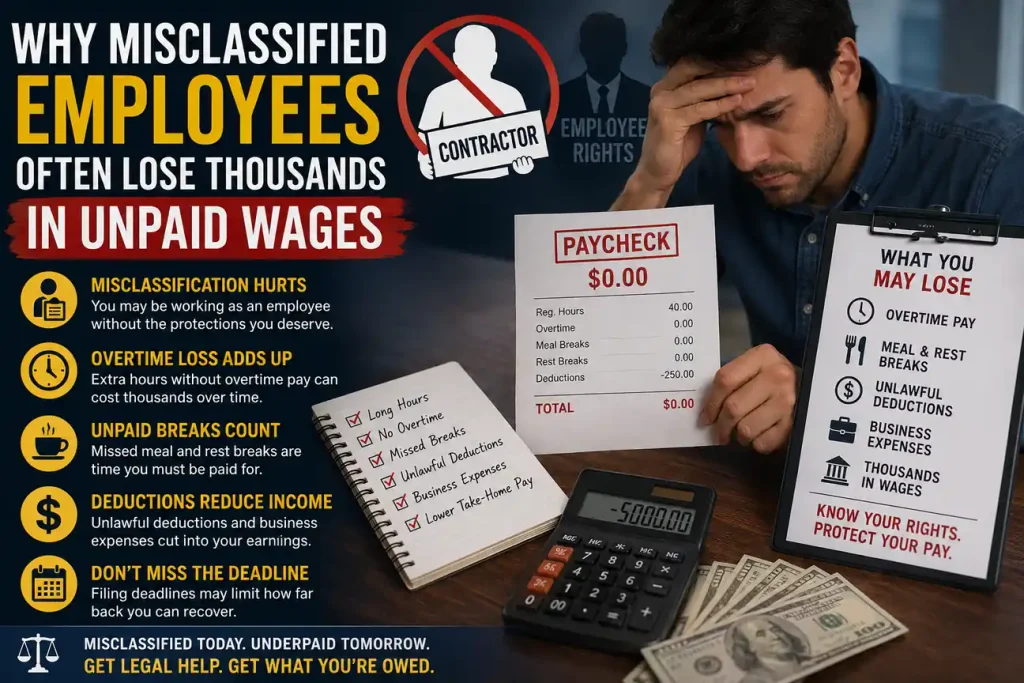
Employee classification affects overtime, meal periods, rest breaks, payroll deductions, and access to wage remedies. A worker labeled an independent contractor may perform the same duties as a staff employee while receiving fewer protections. That mismatch can produce serious financial losses over months or years. Job titles and tax forms may look official, yet daily duties often tell a different story. Reviewing schedules, supervision, payment records, and workplace expectations can reveal whether an employer used the wrong classification.
Workers who notice missing overtime or unexplained deductions often seek advice from Omega Law employment lawyers in LA. A qualified assessment can compare workplace facts with wage requirements, review written agreements, and calculate unpaid compensation. Useful records include pay statements, time logs, messages, schedules, invoices, and tax documents. Early action matters because filing deadlines may limit recovery, even when payroll records support the worker’s position.
Classification Depends on Daily Duties
A job title does not determine legal status by itself. The working relationship matters more. Someone called a contractor may legally qualify as an employee if the business controls schedules, assignments, methods, training, or performance standards.
Reviews often consider supervision, economic dependence, required tools, permanence, and freedom to accept outside work. No single factor decides every case. The full arrangement provides the clearest picture of the worker’s status.
Overtime Losses Add Up Quickly
Misclassified employees frequently lose overtime because contractors receive a flat fee or fixed weekly amount. Eligible employees generally earn one and one-half times their regular rate after forty hours in a workweek.
A person earning $20 per hour who works ten extra hours each week may lose $100 in overtime premiums. Across fifty weeks, that shortfall reaches $5,000 before interest, penalties, or other available damages.
Unpaid Breaks Increase the Total
Financial losses may also come from missed meal periods, interrupted rest periods, or work performed before and after scheduled shifts. Employees sometimes answer messages, complete closing duties, or travel between locations without recording that time.
Thirty unpaid minutes per shift, five days a week, equals more than 130 hours annually. At $20 per hour, those minutes represent $2,600 before overtime adjustments are factored in.
Payroll Deductions Can Create Extra Damage
Some businesses deduct equipment costs, uniforms, shortages, processing fees, or training expenses from worker pay. Such practices may violate wage rules if deductions reduce earnings below required minimum levels or transfer ordinary operating costs to staff.
A misclassified worker may also pay self-employment taxes, purchase insurance, provide tools, and cover transportation. These expenses lower net income and may demonstrate financial dependence on the hiring company.
Written Agreements Do Not End the Inquiry
A contract identifying someone as an independent contractor does not settle the question. Wage standards examine how the parties functioned in practice, rather than relying on one document’s wording.
Payment records may show a project fee, while work instructions reveal employee-level control. Fixed hours, required meetings, repeated assignments, direct supervision, and disciplinary measures can support an employee classification despite contract language.
Records Help Measure the Claim
Clear records make wage calculations more dependable. Workers should retain pay statements, bank deposits, invoices, calendars, route information, text messages, emails, and personal notes showing daily hours.
A weekly chart can track regular shifts, extra assignments, missed breaks, deductions, and amounts received. Comparing those details with payroll documents may expose repeated shortages that isolated paychecks fail to show.
Deadlines Can Reduce Recovery
Wage claims carry filing deadlines that vary by jurisdiction, violation type, employer conduct, and governing law. The available period may differ for unpaid overtime, deductions, retaliation, or recordkeeping failures.
Delay can remove older pay periods from a potential claim. Anyone who suspects misclassification should preserve records promptly and obtain legal guidance before key dates pass. Early review also helps protect evidence from changing schedules, deleted messages, or staff turnover.
Employers May Face Additional Damages
A successful claim may include unpaid wages, overtime premiums, interest, statutory penalties, attorney fees, or additional damages authorized by applicable law.
The final value depends on verified hours, pay rates, deductions, deadlines, and available remedies. A calculation based on one paycheck may understate the total. Reviewing several months of records can provide a more accurate basis for settlement discussions or court action.
Common Warning Signs
Several facts may indicate an incorrect classification. A business may require fixed shifts, dictate work methods, provide training, monitor performance, and restrict outside assignments.
Other warning signs include hourly payment, company-provided equipment, mandatory reporting, continuous work, and discipline for refusing assignments. One detail proves little, but several combined indicators may show an employee relationship.
Conclusion
Misclassification can affect much more than a position label. Lost overtime, unpaid preparation, unlawful deductions, business expenses, and missed breaks may reduce earnings by thousands of dollars. Workers can strengthen potential claims by preserving records, tracking every hour, and comparing daily duties with applicable wage standards. Because deadlines may limit older losses, early review gives affected employees a better chance to identify the complete amount and pursue available remedies.