8 Mistakes That Can Hurt Your Personal Injury Case
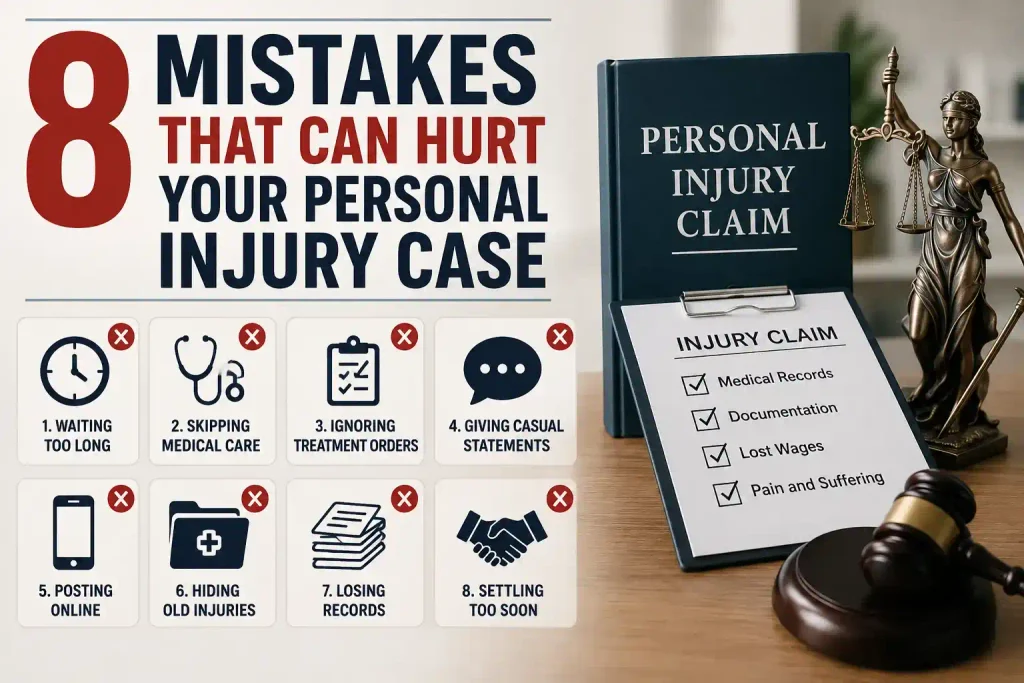
A personal injury claim can lose strength long before any lawsuit is filed. Choices made during the first hours, days, and weeks often shape how insurers, doctors, and defense counsel read the record. Delayed treatment, loose remarks, and poor documentation can obscure the link between trauma and symptoms. Solid cases rest on prompt care, accurate reporting, and a clear paper trail that shows how an injury changed daily life.
Early Guidance Matters
After a crash, fall, or similar event, people often speak before pain patterns and injury findings are fully documented. North and South Carolina personal injury lawyers can review rushed statements, missing charts, wage loss gaps, and early settlement pressure that weakens otherwise valid cases. Careful legal guidance helps connect the injury, treatment records, and fault evidence before an insurer shapes a version that favors its own position.
1. Waiting Too Long
Bruising fades, debris is cleared, and witness memory loses detail with each passing week. Filing deadlines are also important, and missing one can bar recovery altogether. Prompt action helps preserve photographs, surveillance footage, employer records, and emergency notes. Strong timing gives the case a cleaner factual base, which makes later disputes over fault and injury more difficult to manufacture.
2. Skipping Medical Care
A gap in treatment often raises concerns about causation. Adjusters may argue that pain was mild, temporary, or tied to a prior condition. Early examination creates a medical timeline that links force, symptoms, and functional limits. Clinicians also record swelling, restricted motion, weakness, numbness, and sleep disruption. Without those findings, even a painful injury may appear minor when the claim is reviewed months later.
3. Ignoring Treatment Orders
Missed therapy visits, unfilled prescriptions, or canceled specialist appointments can suggest that symptoms improved sooner than claimed. Defense counsel often uses those lapses to question seriousness and self-care. Consistent attendance shows effort, persistence, and a reasonable response to medical advice. That pattern also gives providers a fuller picture of recovery speed and lasting physical limitations.
4. Giving Casual Statements
Offhand comments can cause lasting damage. A person in shock may say that everything feels fine, then wake later with neck stiffness, headache, or radiating pain. Insurers use those early remarks and compare them against later treatment. Recorded calls also capture guesses about speed, distance, or body position. Careful answers should stay factual, brief, and limited to what is known at that moment.
5. Posting Online
Social media usage can distort a claim with very little effort. One smiling photograph, short video, or joke may be framed as proof that pain complaints are exaggerated. Context rarely survives a screenshot. Privacy settings do not erase that risk, because shared material can still travel. During an active case, a quiet online presence helps prevent selective posts from overshadowing medical findings and day-to-day physical limits.
6. Hiding Old Injuries
Prior injuries do not automatically defeat a case. Many adults may be dealing with arthritis, disc changes, old fractures, or earlier soft tissue strain. Trouble starts when those facts stay hidden and later appear in records. That inconsistency can damage credibility quickly. Honest disclosure lets doctors separate baseline symptoms from new trauma, worsening pain, or added functional loss caused by the recent event.
7. Losing Records
Documentation often decides whether a claim appears to be reliable. Medical bills, discharge instructions, imaging reports, pay stubs, pharmacy receipts, and repair photographs all help show real loss. Missing paperwork gives the other side space to challenge timing, cost, or severity. Organized records make the history easier to follow from injury through treatment. Good files also support a settlement figure grounded in evidence.
8. Settling Too Soon
An early offer can feel tempting when bills pile up and work hours drop. Still, some injuries are not always obvious. Concussion symptoms may linger, back pain can worsen, and nerve irritation sometimes appears after swelling changes. Once a release is signed, the case is usually over. A fair resolution should reflect current expenses, future care needs, lost income, and the lasting effect on normal activity.
Conclusion
Personal injury cases are shaped by conduct after the event as much as by the event itself. Medical follow-through, careful communication, and complete records help preserve the connection between trauma and ongoing symptoms. Delays, omissions, and inconsistent statements give insurers room to discount harm. When the facts are documented clearly from the start, a claim stands on firmer ground and is better positioned for fair financial recovery.